Some farms are famous in their county. Gunthorp Farms is famous in Chicago.
That is not an accident. It is the result of four generations of stubbornness, a phone call to one of the country's best restaurants in 1998, and a family decision to raise animals the way animals are supposed to be raised, regardless of what the rest of the industry was doing.
The farm sits near LaGrange, Indiana, in the northeastern corner of the state. It looks like a lot of other farms in LaGrange County from the road. What happens on it is anything but ordinary.
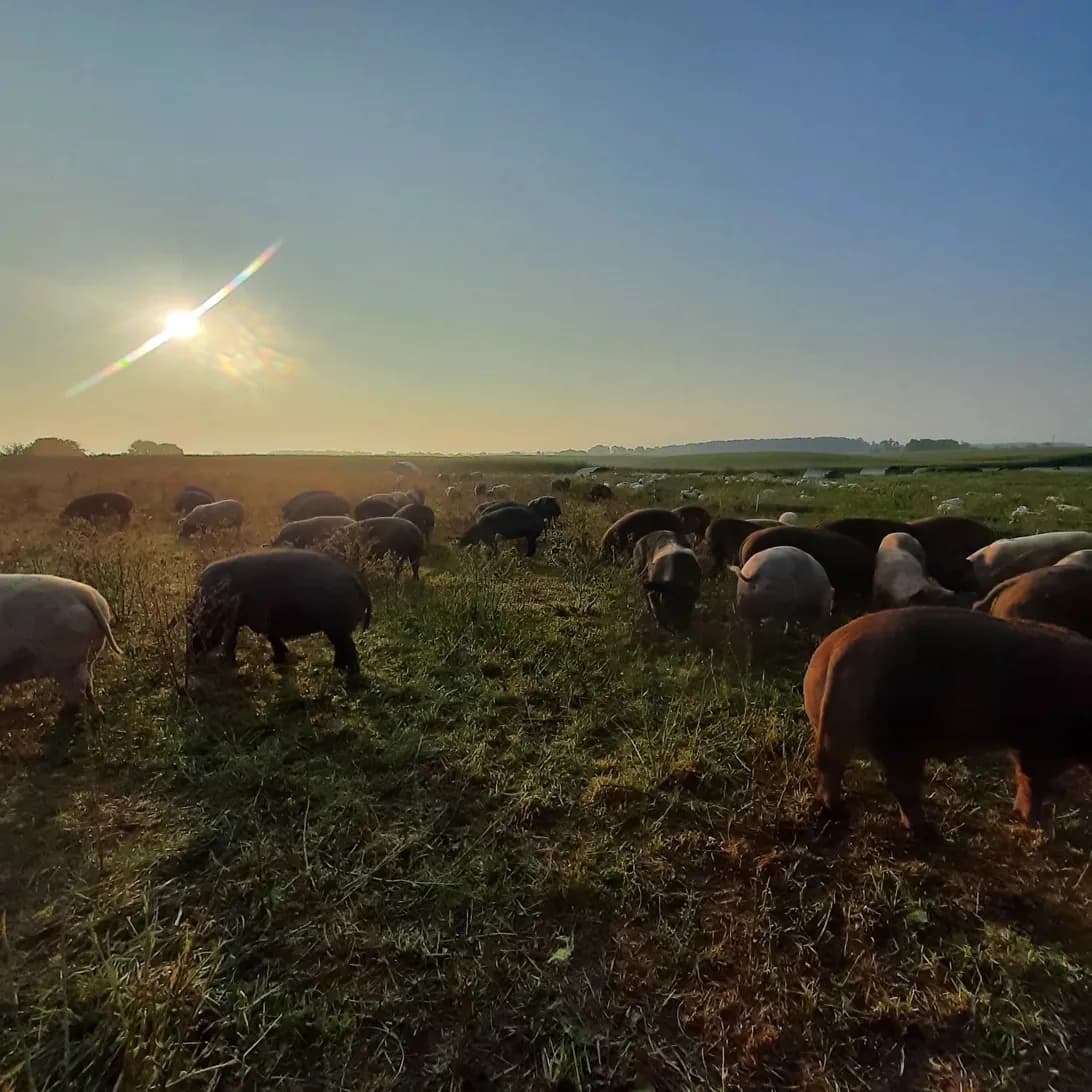
Four generations on the same ground
Greg Gunthorp did not choose farming. He was born into it. His great-grandfather worked the land here, followed by his grandfather, followed by his father. Greg remembers riding the tractor with his grandfather before he was old enough for school, feeding the sows in the morning, watching the baby pigs run in the pasture.
The Gunthorp family raised pigs the old way, on pasture, letting the animals roam and root and eat what pigs eat when left to themselves. They never put their pigs in confinement buildings. They never went in heavy on antibiotics. They grew most of their own feed. It was not a philosophy then. It was just how farming worked before industrial agriculture told everyone to get big or get out.
Greg studied agricultural economics at Purdue, heard the industrial mantra, and came home early with an associate's degree. He has said more than once that if he had listened to what they were teaching in West Lafayette, he would have come home, built confinement buildings, and gone bankrupt in 1998. He is probably right.
The year everything broke
1998 was a catastrophic year for pig farmers. A massive industry-wide glut drove prices from around fifty cents a pound down to eight cents in some markets. Farmers were losing money on every animal they sent to slaughter. Greg was four years into farming on his own. He could either quit or do something different.
He could not imagine quitting.
So he picked up the phone and started calling restaurants. Grocery stores. Meat processors. Anyone who might be interested in pasture-raised pork from a small family farm in northern Indiana. He made the calls for months. He got almost nowhere.
Then, at a sustainable agriculture conference in Missouri, someone told him about a restaurant in Chicago that was looking for a new pork supplier. The restaurant was Charlie Trotter's, at the time one of the most celebrated dining destinations in the country. Greg did not know that. He just called.
The chef de cuisine picked up. They talked for fifteen minutes. He told Greg to bring a pig over.
Greg and his wife Lei loaded a freshly slaughtered pig into the back of their Suzuki Swift hatchback, packed it in ice, and drove to downtown Chicago. Greg had barely been to Chicago before. He was, by his own account, white-knuckled by the time they arrived.
The kitchen staff broke the pig down entirely. They used the head, the bones, the shoulders, the tail, every part of it. A few days later they called and ordered another one.
Building something that did not exist
Word traveled. Within months, Gunthorp Farms was supplying some of Chicago's best restaurants. Rick Bayless at Frontera Grill became a long-term partner and a genuine advocate. The farm expanded from pigs to chickens, turkeys, and ducks. The name Gunthorp Farms started appearing on menus at restaurants that charged three dollars and fifty-nine cents a pound for pork shoulder when the commodity price was under a dollar fifty.
Chefs paid it because the product was different and they knew where it came from.
But selling to high-end Chicago restaurants required a USDA-inspected processing facility. The nearest one was in Chicago. So Greg did something that almost no small farmer had ever done: he built his own. Right on the farm. Threading through federal regulations, financing challenges, and a full army of bureaucrats to get there. Today the on-farm processing plant is one of the things that makes Gunthorp Farms genuinely rare. They raise the animals, process them, and deliver them. Start to finish, on their own ground, on their own terms.
A family operation
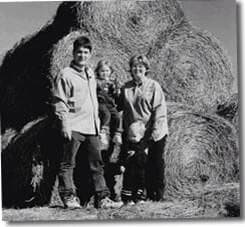
Gunthorp Farms is not Greg's farm. It is a family farm in the fullest sense. Greg's wife Lei handles the accounting and finances. Their daughter Kara, who studied agricultural business at Purdue, runs sales and marketing. Her husband Ed manages the farm operation. Their son Evan runs the processing plant, overseeing everything from slaughter to packaging and shipping.
They work on 240 acres, and it works because they are not competing on commodity terms.
The farm has roasted pigs at Wrigley Field for the Chicago Cubs. It has been featured in Chicago magazine and covered by national food media. Greg traveled to Washington in November 2025 to meet with U.S. Agriculture Secretary Brooke Rollins as one of four small independent meat processor owners making the case for regulatory reform, fairer antitrust enforcement, and better support for small and regional processing operations. He was, as he tends to be, direct about what needs to change and why.
What they raise and how to buy
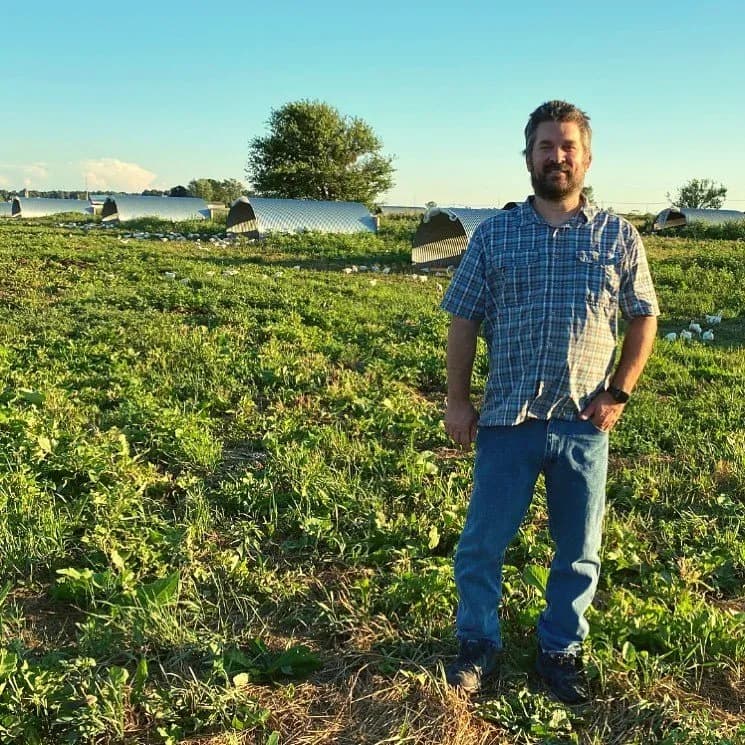
Gunthorp Farms raises pasture-based hogs, chickens, turkeys, and ducks on their LaGrange County property. Their animals are raised outdoors on pasture, not in confinement buildings, without the routine antibiotics that industrial operations depend on. The difference is something you can taste.
They sell direct through their online store at gunthorpfarms.com, with shipping available nationally. Pork, duck, and turkey products are available for order, processed at their on-farm USDA-inspected facility.
They are also listed in the Buy Hoosier directory, where you can find their contact information and learn more about what they raise.
A farm worth knowing
There are a lot of farms in LaGrange County. Gunthorp Farms is the one that proved a small, family-run, pasture-based operation in rural Indiana could earn a national reputation without compromising what made it worth knowing in the first place.
Four generations in. Still on the same ground. Still doing it the hard way, which it turns out is the right way.
Browse the Gunthorp Farms listing at buyhoosier.com, or visit them directly at gunthorpfarms.com.
Gunthorp Farms is a Buy Hoosier listed farm in LaGrange County, Indiana.